
Tax and Revenue: a guide for sole traders
Reviewed 11 November 2026. This guide replaces our historical Budget 2019 tax figures. Tax rules, rates and deadlines can change. Check the linked Revenue guidance and seek professional advice for your circumstances.

1. Registering for tax
Revenue says people who are self-employed should register for Income Tax self-assessment. If you are a PAYE employee, you can register through Revenue myAccount under Manage My Record, then Tax registrations. You need a PPS number, business start date, NACE code and expected turnover. Once registered as a sole trader, use Revenue Online Service (ROS) to file returns and make payments.
See Revenue’s sole trader registration guide and who should register for self-assessment. Do not assume a paper form will arrive automatically or that all part-time income is exempt from reporting.
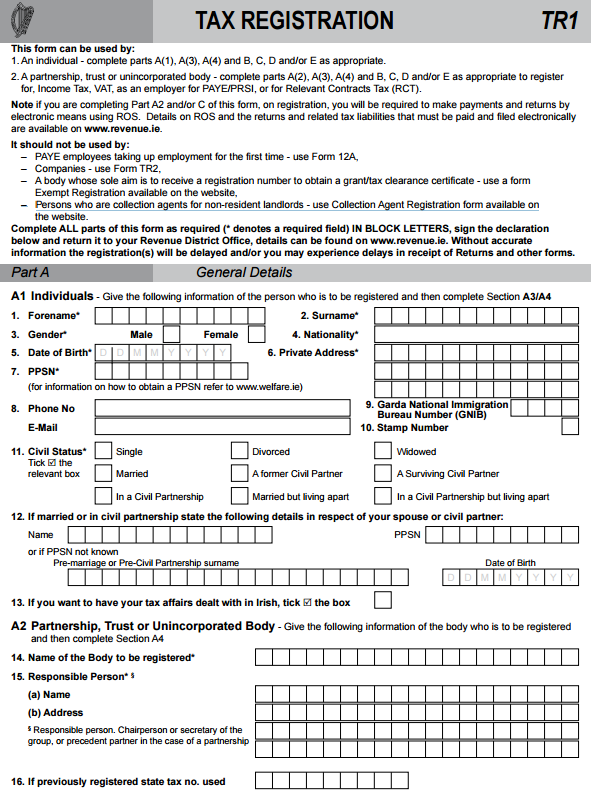
Historical illustration of a tax registration form; check Revenue for the registration process that applies to you.
2. Income Tax, USC and PRSI
Your business profit is generally your business income less allowable business expenses. Income Tax, Universal Social Charge (USC) and Pay Related Social Insurance (PRSI) may apply depending on your circumstances. Personal tax credits, other income and the rules for allowable expenses can affect the amount due. Keep records of your income and expenses, and check the current rules with Revenue or an accountant.
Set money aside for your tax bill throughout the year. There is no single percentage that is guaranteed to be enough for everyone.
3. Returns and preliminary tax
Under self-assessment, the usual pay-and-file date is 31 October: you generally file the previous year’s return, pay any balance due and pay preliminary tax for the current year. Revenue may extend the deadline when you both pay and file through ROS. For the 2025 return, Revenue lists 18 November 2026 as the extended ROS deadline. Check Revenue’s pay-and-file guidance for current dates and conditions.
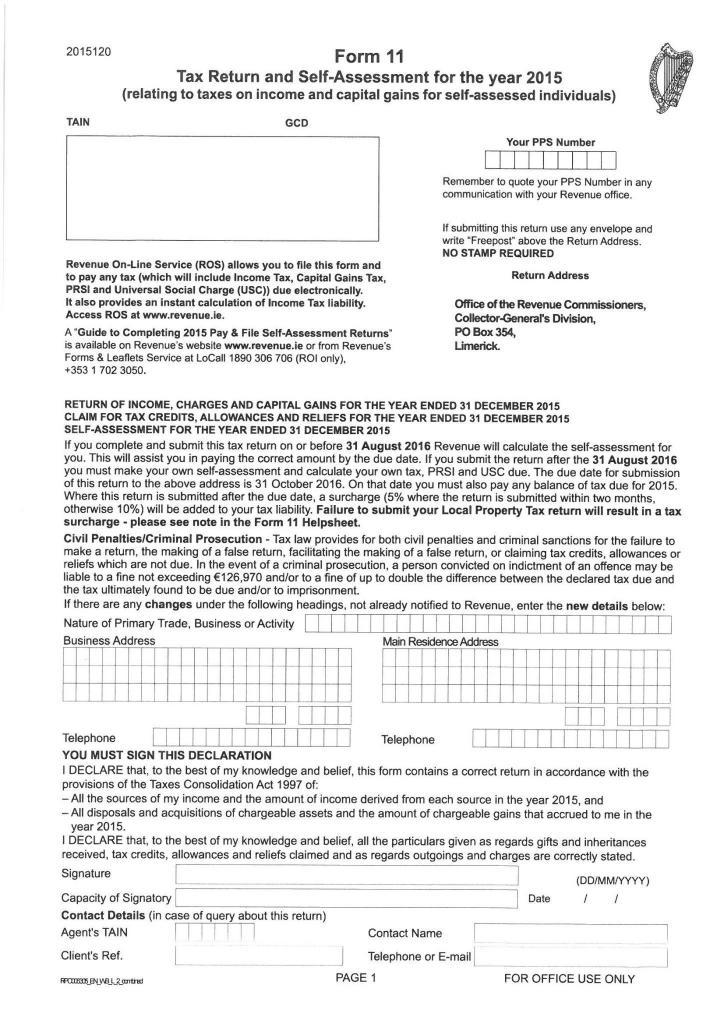
Historical illustration of a Form 11. Check Revenue for the current return and filing process.
4. VAT
VAT registration depends on the type and value of your taxable turnover, not your profit. As of this review, Revenue lists principal annual thresholds of €42,500 for services and €85,000 for goods. Other rules and thresholds apply, including for some mixed supplies, manufactured goods and cross-border transactions. You may be able to register voluntarily below a threshold. Check Revenue’s VAT thresholds and the other registration rules for your situation.
5. Keep records and get help
Keep sales and expense records from the start. See Revenue’s record-keeping guidance and our accounts guide. For individual advice on registration, returns or amounts to set aside, speak to a qualified accountant or tax adviser.
This guide is general information, not personal tax, legal or accounting advice. Always check current Revenue guidance before acting.
Found this guide useful? You can optionally buy us a coffee.